
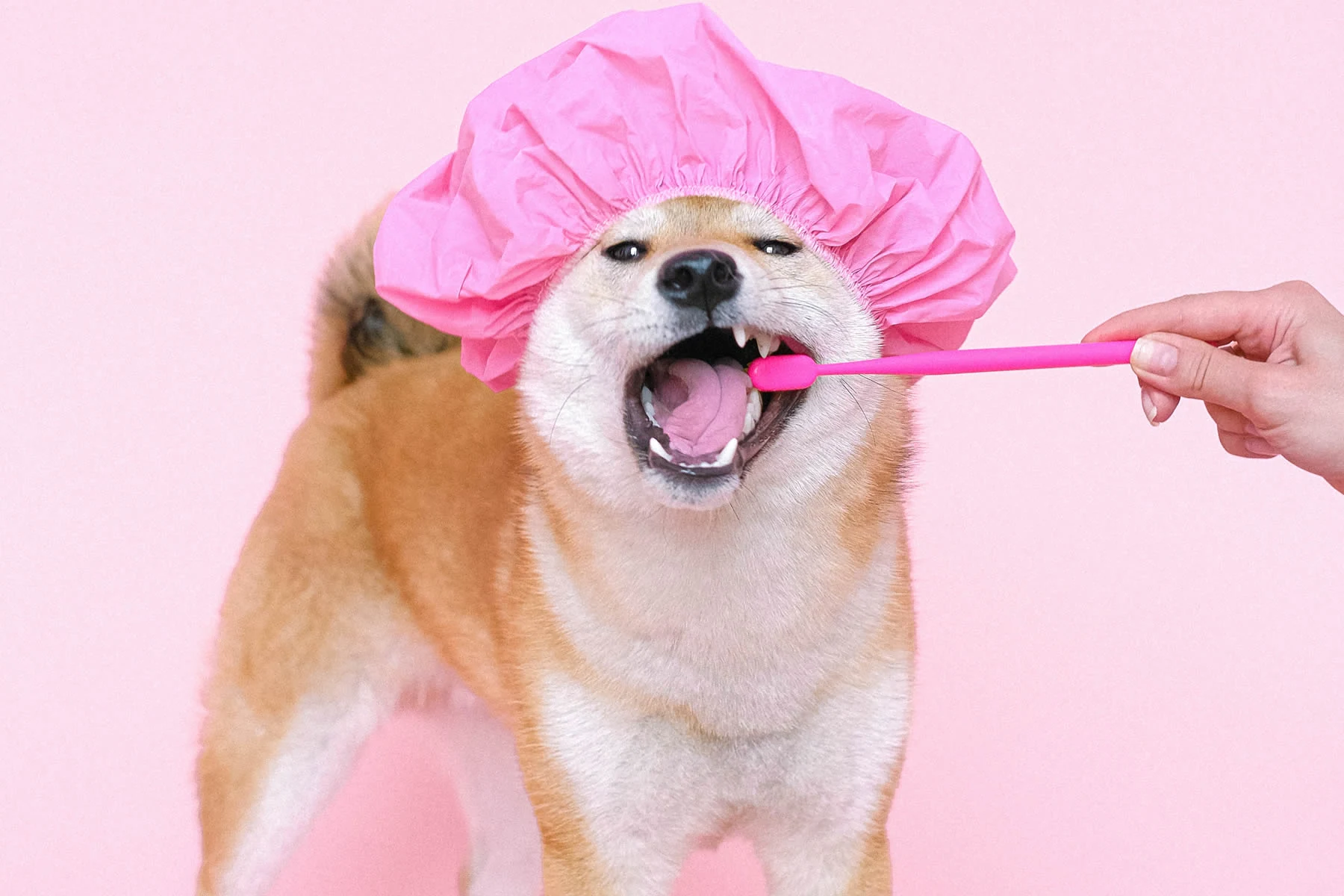
Just like us, animals suffer from bad breath, dental plaque and tartar. The cause of bad breath in a dog or cat is the build-up of dental plaque and tartar on the teeth, and inflammation of the gums.
This usually happens with age, but there are exceptions: some smaller dog breeds build up tartar very early (for example, the Yorkshire terrier).
How tartar forms
The process starts with the formation of so-called dental plaque. After a certain time, the plaque mineralises and turns into tartar. The accumulated tartar lifts the gum and exposes the roots of the teeth. Food, hair and other "treasures" get trapped in the pockets that form, which makes the breath even more unmistakable. The gums become inflamed and red.
When to come for a check-up
If you notice any of the following signs, it is time to see a vet:
- Bad breath
- A broken or loose tooth
- An extra tooth or a retained baby tooth
- Teeth that are discoloured or covered in tartar
- Reduced appetite or refusing food
- Pain in or around the mouth
- Bleeding gums
- Swelling around the mouth
- Heavy drooling
Your pet's teeth and gums should be checked by a vet at least once a year, so that any dental problems are found in good time and more serious complications are avoided.
Dental care at home
There is a wide range of products on the market for looking after your pet's oral hygiene. The most popular is toothpaste. It comes with a toothbrush, which often turns out to be impossible to use. That is why a dog should get used to the procedure while it is still small. With cats it is almost impossible to do. The pastes are safe and there is no need to rinse the mouth.
Sprays are convenient to use, but they also involve opening the mouth and spraying. They are designed to destroy the bacterial flora in the mouth that contributes to the build-up of dental plaque.
For more impatient owners and pets, there are alternative ways to prevent build-up: mouthwash, flavoured gel, powder and others.
The easiest and most pleasant way to maintain oral hygiene is so-called dental chews, sticks or bones. They are tasty and the dog has fun eating them. As well as being beneficial, they are your dog's favourite treat. They contain substances that bind the excess calcium in the saliva, so that it does not become part of the dental plaque, and this slows down the formation of tartar.
Prevention never stops
Once tartar has been cleaned off, it builds up again over time. That is why it is recommended to use one of the preventive products listed, to slow down or even prevent the process.
Let us all smile, healthy.
This article is general information and does not replace an examination and individual advice from a veterinarian.