
A regular preventive check-up is one of the best things you can do for your cat. The earlier we find a problem, the easier it is to treat. For many cats, though, the hardest part is not the examination itself but everything before it: being carried, the car, the unfamiliar smells.
The good news is that much of this stress can be avoided at home. Here is what the international cat care guidelines (AAFP and ISFM) recommend, put together in a few simple steps.
Why cats get stressed before the visit
Cats do not like losing control. Being shut in a carrier, being swayed about on the way, the noise of the car and an unfamiliar place add up one after another. The more of these moments there are before you reach the practice, the more tense your cat is when we see it.
There is something else too: cats pick up on our mood. If you are anxious, your cat will be too. That is why preparation helps both of you.
Choose a suitable carrier
- A hard plastic carrier is the safest and the easiest to clean.
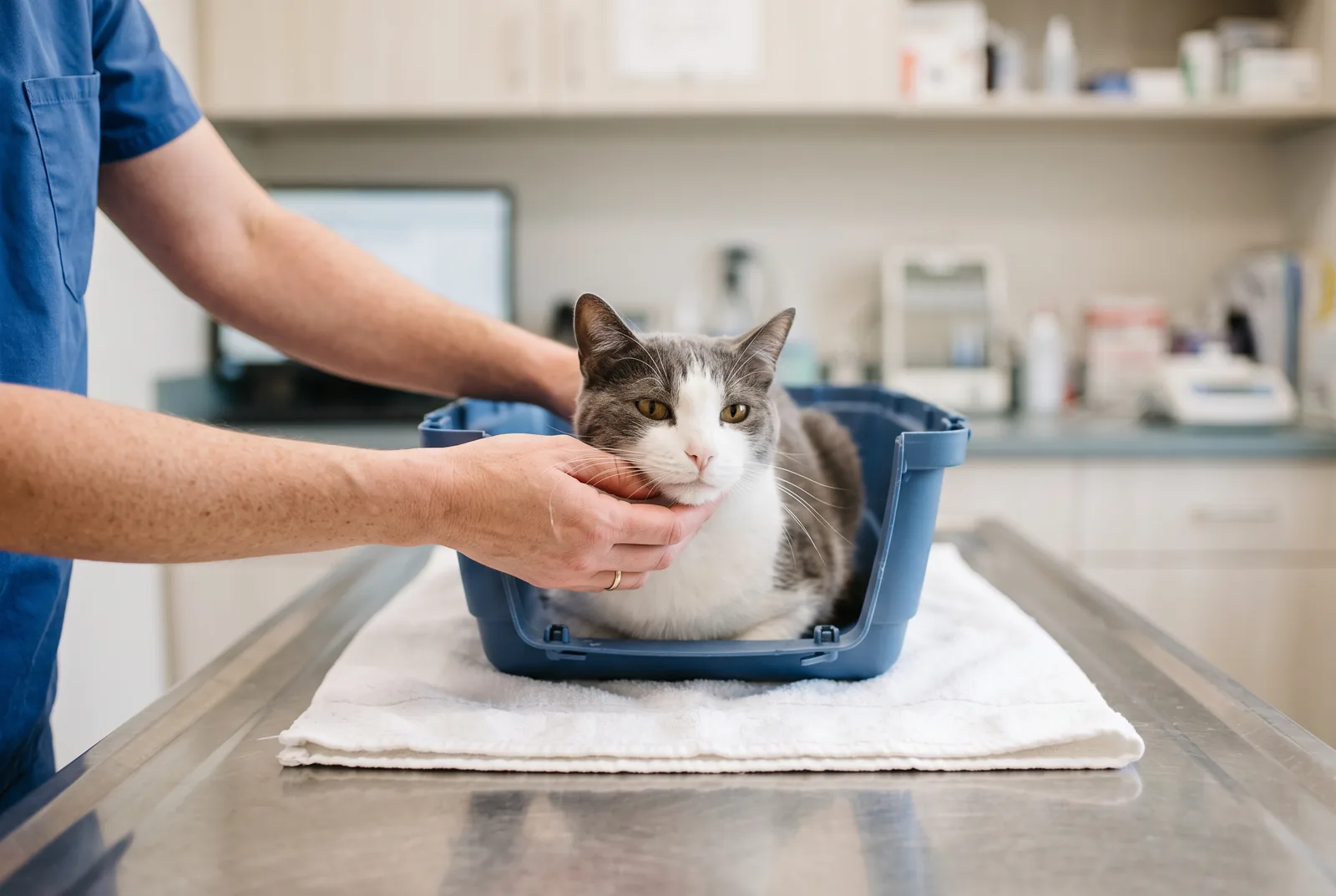
- Ideally one with a lid that comes off. That way the vet can examine your cat while it stays in the bottom half of the carrier, in a familiar place.
- A soft carrier should have a large opening on top and a door that does not collapse when open.
- Backpack-style carriers are not suitable. The cat does not have enough room and feels insecure.
- A collar or lead is not a safe way to carry a cat.
- If you bring more than one cat, each one needs its own carrier, even if they get on well at home.
Make the carrier "their place"
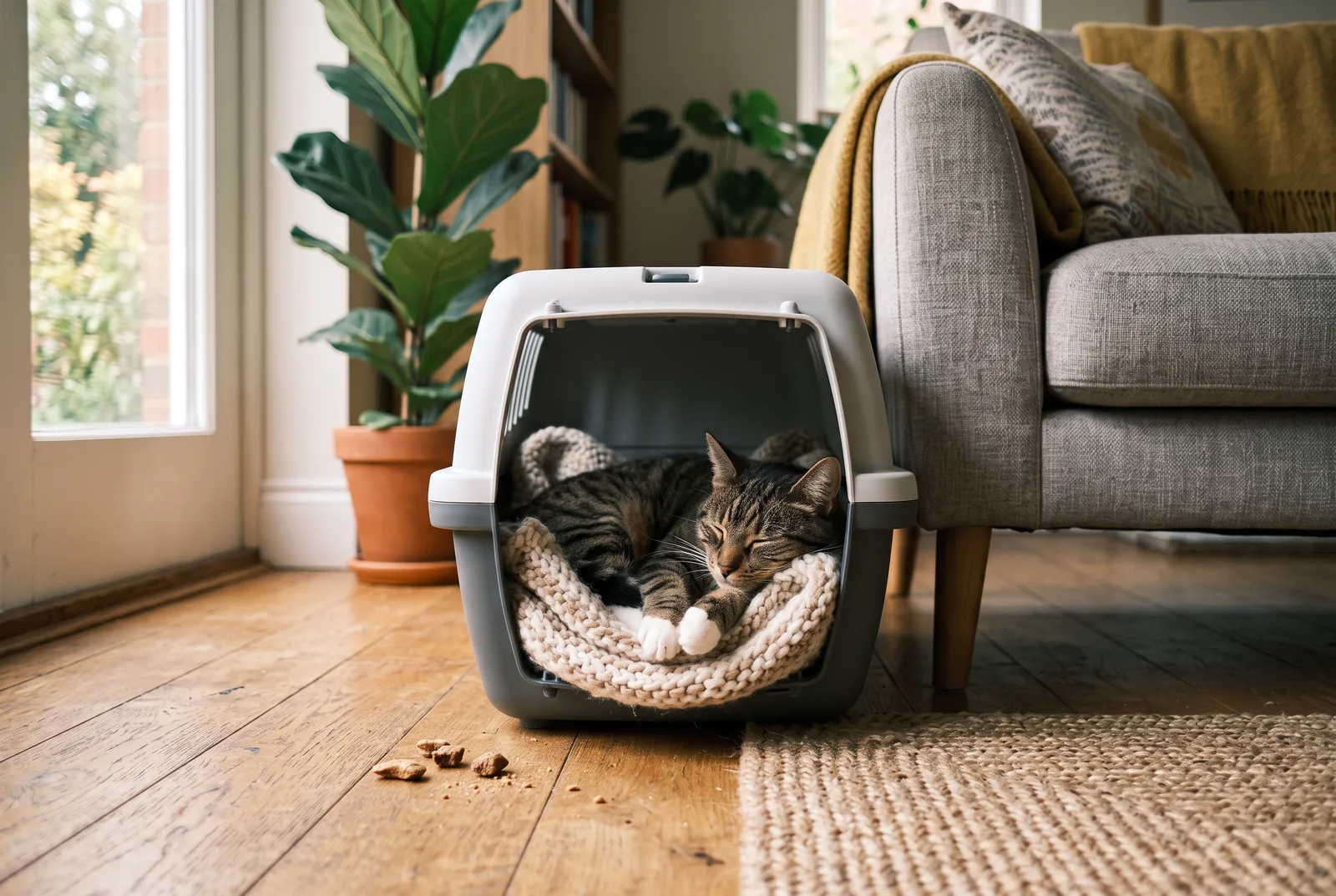
Many people keep the carrier in the cellar or a wardrobe and bring it out only when they have to go to the vet. The cat quickly links the carrier with something unpleasant.
It is better to keep the carrier at home, somewhere your cat likes to spend time. Put a small blanket or mat with familiar smells inside, and leave a treat in it from time to time. That way the carrier becomes a safe little corner, not a trap. There is another benefit: in an emergency the carrier is close at hand.
Carrier training in six steps
Spend as long on each step as your cat needs to get used to it, and only then move on to the next.
- Encourage your cat to lie and sleep on one particular blanket.
- Put this blanket at the bottom of the carrier.
- Put the lid on and encourage your cat to stay calm inside.
- Encourage it to stay in the carrier with the door closed.
- Gradually increase the time it spends in the closed carrier.
- Lift the carrier, holding it from underneath and not only by the handle, until your cat gets used to this as well.
It is best if your cat goes in on its own, for a treat or a toy. If you have to put it in yourself, do it calmly and gently.
On the day of the visit
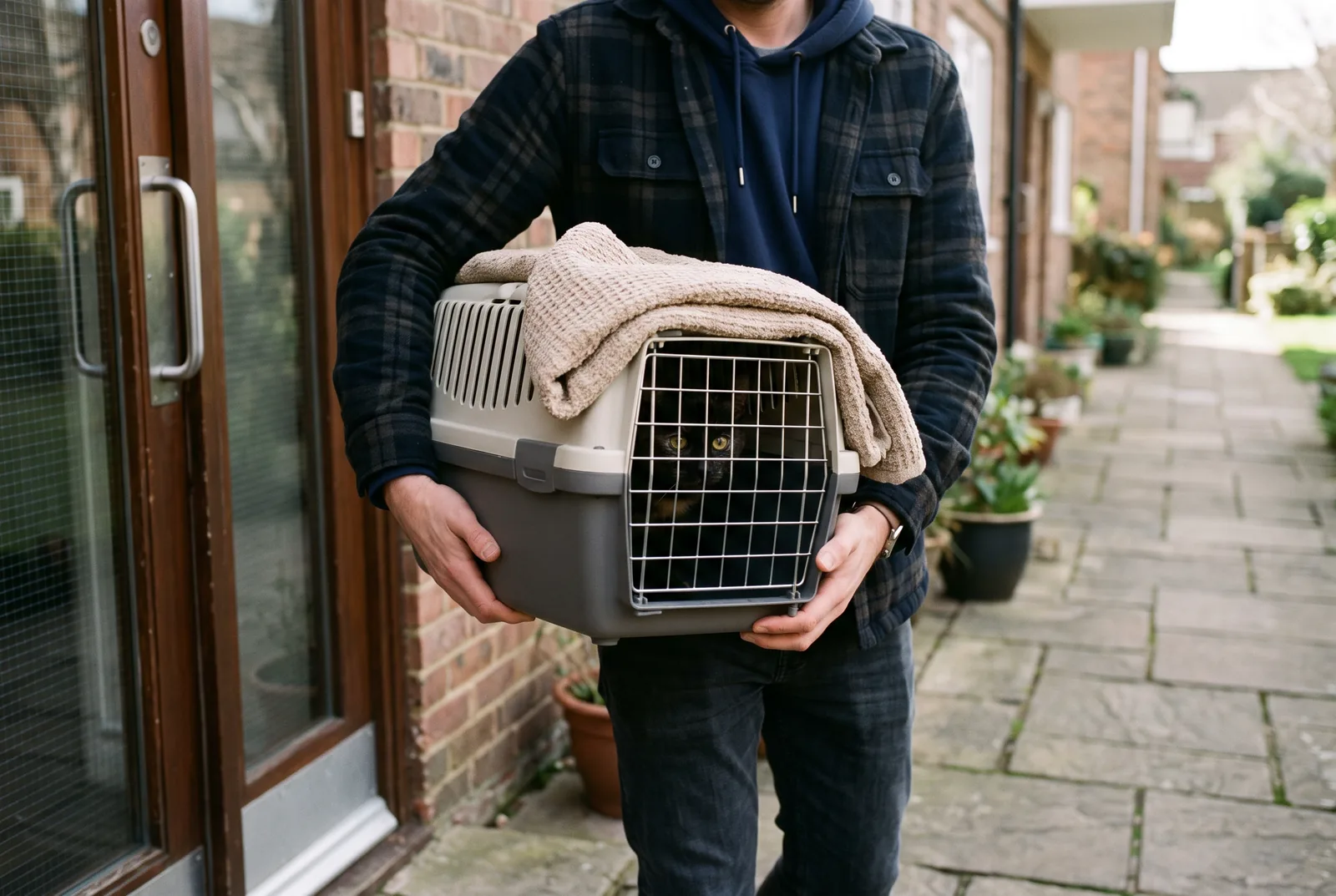
- Cover the carrier with a blanket or a thick towel before you leave the house. That way your cat sees and hears less.
- Carry the carrier holding it from underneath, not only by the handle. It sways less and stays level.
- In the car, the safest place for the carrier is on the floor, between the front and back seats.
- Keep the car ventilated and at a pleasant temperature. Turn the music off and do not talk loudly.
- Do not open the carrier on the way, even if your cat meows. It is not safe for it or for you. Speak to it quietly and calmly.
- If you use a calming spray with feline pheromones, spray the blanket between 15 minutes and 4 hours before you set off, while your cat is not nearby.
- Ask us whether you can give a small treat in the carrier.
If your cat still gets stressed
For some cats, travelling is hard despite every effort. The cause may be a bad past experience, or something from before you adopted it. In that case the vet can prescribe a medicine that your cat takes before the journey to help it stay calmer. If your cat vomits or drools on the way, it may need an anti-sickness medicine. Do not give anything without a vet's advice. Call us and we will talk it over.
What to bring with you
We recommend booking an appointment in advance. That way your cat will not wait in the waiting room and get even more stressed before the examination.
- Your cat's health record (vaccination passport).
- The results of any previous tests, if you have them.
- A short list of questions and of any changes you have noticed: appetite, drinking, litter tray, behaviour.
- If blood tests are planned, ask us when you book whether your cat needs to come fasting.
Once you are back home
If you have other cats at home, they may not recognise the cat that has come back at first. It smells different, especially after a longer stay or an operation. So:
- Leave it in the carrier first with the door closed and see how the other cats react.
- If one of them hisses, give your returning cat a separate room with everything it needs: food, water, a litter tray and a bed.
- Swap the cats' bedding so that the smells mix.
- After a few hours, or longer after an operation, as your vet advises, gradually let them meet again.
Ready for the visit?
A little preparation at home makes the visit calmer for your cat and for you. If you have questions about how to prepare your cat, call either of our two practices in Iztok. We will be happy to help.
This article is general information and does not replace an examination and individual advice from a veterinarian.